Laughing Gull (Leucophaeus atricilla)
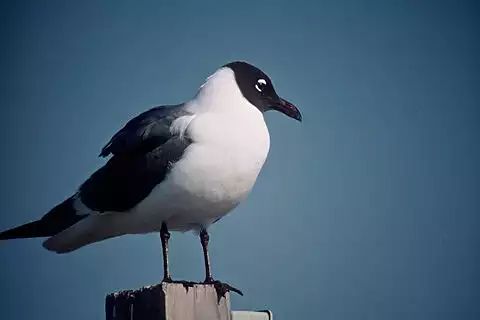
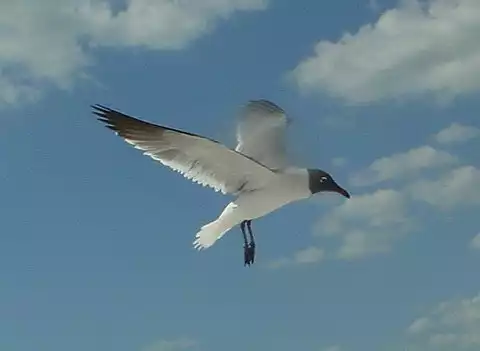
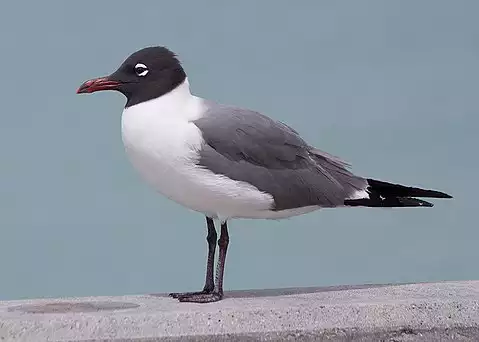
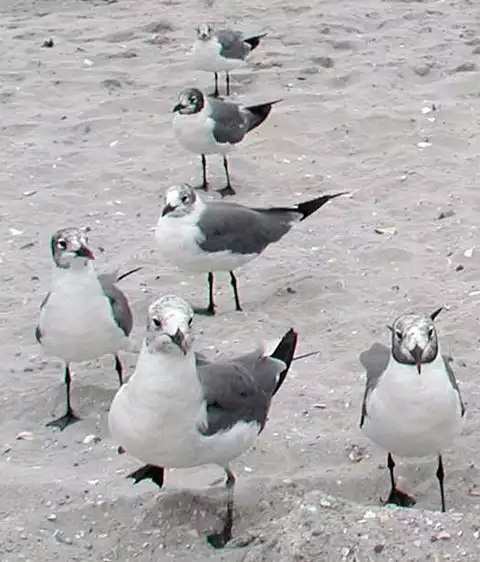
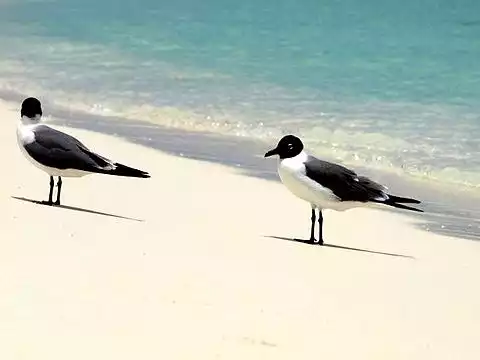
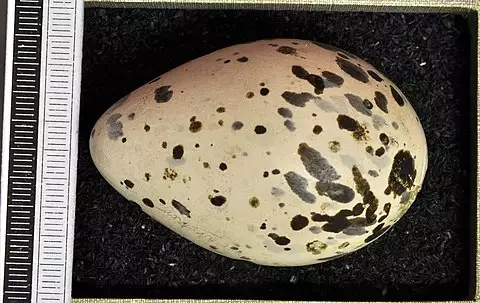
Laughing Gull
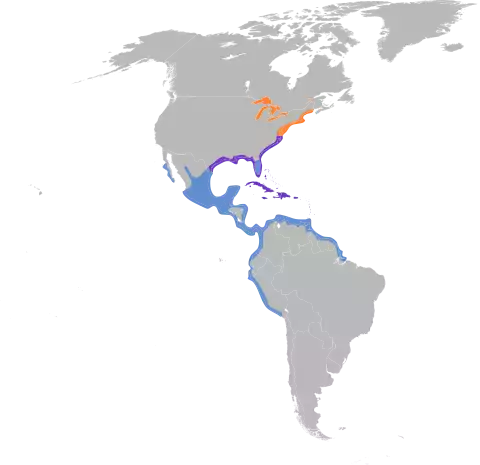
Description
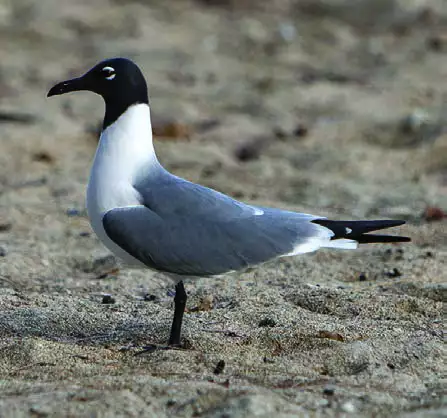
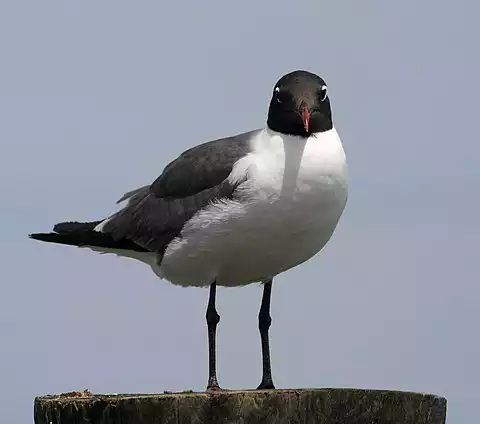
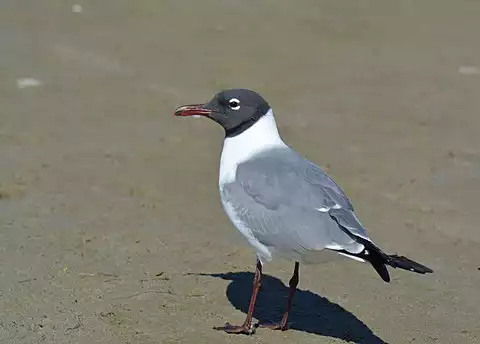
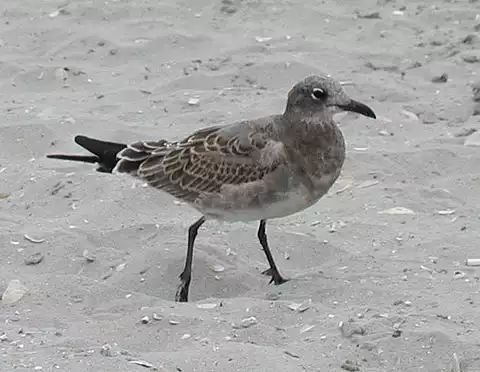
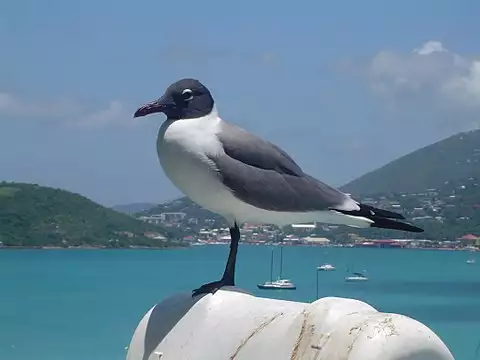
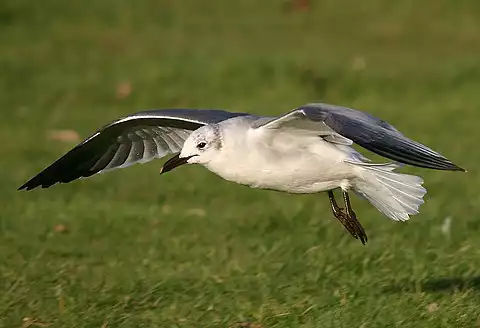
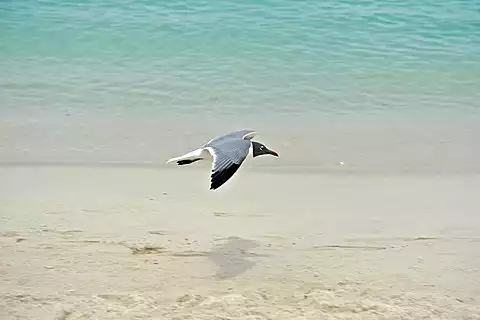
The laughing gull (Leucophaeus atricilla) is a medium-sized gull of North and South America. Named for its laugh-like call, it is an opportunistic omnivore and scavenger. It breeds in large colonies mostly along the Atlantic coast of North America, the Caribbean, and northern South America. The two subspecies are: L. a. megalopterus – which can be seen from southeast Canada down to Central America, and L. a. atricilla which appears from the West Indies to the Venezuelan islands. The laughing gull was long placed in the genus Larus until its present placement in Leucophaeus, which follows the American Ornithologists' Union. This species is easy to identify. It is 36–41 cm (14–16 in) long with a 98–110 cm (39–43 in) wingspan and a weight range of 203–371g (7.2-13.1 oz). The summer adult's body is white apart from the dark grey back and wings and black head. Its wings are much darker grey than all other gulls of similar size except the smaller Franklin's gull, and they have black tips without the white crescent shown by Franklin's. The beak is long and red. The black hood is mostly lost in winter.
Distribution & Habitat
The Laughing Gull occurs through the tropical, subtropical, and some temperate areas of the Western Hemisphere including the West Indies, where it is generally common from April to September and becomes irregular and rare during the rest of the year throughout most of the islands (Raffaele and others 1998). It usually nests on offshore rocky cays around Culebra, Mona, and Monito (Oberle 2018). On Vieques, it ranges from fairly common to rare (Gemmill 2015). It usually inhabits marshes, coastal marine waters, tidal fl ats (Oberle 2018), calm bays, and offshore islets (Raffaele and others 1998). Although it is most common in coastal areas, it may move inland and frequent landfills and reservoirs. The atlas fieldwork yielded a total of 124 records within 80 hexagons or 17 percent of the 479 total hexagons (see map). Of the 80 hexagons where this species was found, breeding met the atlas definition of confirmed in 5 percent (4) of the hexagons, probable in 3 percent (2), and possible in 3 percent (2) as well, while the species was observed in 90 percent (72) of the hexagons but without evidence of breeding (see map).Laughing Gull distribution. The map shows the highest breeding code by hexagon and overlaying the ecological life zones in Puerto Rico. Note: percentages may not total 100 due to rounding. 113Laughing Gull/Gaviota Gallega
Breeding Habits
Previously published reports indicate that the Laughing Gull breeds from May to July (Raffaele and others 1998). The nest consists of a scrape with lined grass, usually made on the ground of a beach or in a crevice of a rocky cay, and sometimes near a colony of other seabirds (Oberle 2018, Raffaele and others 1998). Atlas results show that this species breeds mostly from May to July, and to a lesser extent also during March (see chart). Overall, the breeding activity peaks in July, and it mostly takes place within the subtropical dry forest life zone (see chart). Results (see table and map) show that this species breeds mostly in coastal areas within the subtropical dry forest life zone (75 percent of the hexagons), but it may also breed within the subtropical moist forest life zone (25 percent of the hexagons).
Conservation
The overall population trend of the Laughing Gull is described as increasing, although some populations have unknown trends (Butcher and Niven 2007, Wetlands International 2012), and it is currently listed as a species of least concern by the IUCN (BirdLife International 2018). Locally, this species is not listed in any of the threatened categories of PRDNER and USFWS. In Puerto Rico, the Laughing Gull has a protected habitat in land of 6 percent or 12 km2 of the total area covered by the hexagons where evidence of breeding was found for this species (191 km2).
Related Species
Family: gull